Chest pain in women can occur for several reasons, ranging from acid reflux and muscle strain to heart-related conditions that require urgent medical attention. Although many cases of chest pain are not caused by heart disease, it is important not to dismiss persistent, recurrent, or unexplained discomfort.
Understanding the common causes of chest pain in women can help women recognise potential warning signs and know when to seek medical evaluation. Because heart-related symptoms may not always appear as expected, recognising associated symptoms is just as important as identifying the pain itself.
What Does Chest Pain Feel Like in Women?
Chest pain can be experienced in different ways, such as pressure, heaviness, squeezing, tightness, burning, or sharp pain. Chest pain can be felt centrally by some women; other women have experienced chest pain radiating to their shoulder, arm, neck, jaw, back, or upper stomach.
The kind of pain and where it occurs can give important hints, but the pain itself cannot be used to accurately determine the cause of the pain. According to the American Heart Association (AHA), chest pain is the most common heart attack symptom for women and men, although women may have symptoms like nausea and difficulty breathing.
Common Causes of Chest Pain in Women
Chest pain can originate from the heart, digestive system, lungs, muscles, bones, or other structures. The following are some common possibilities.
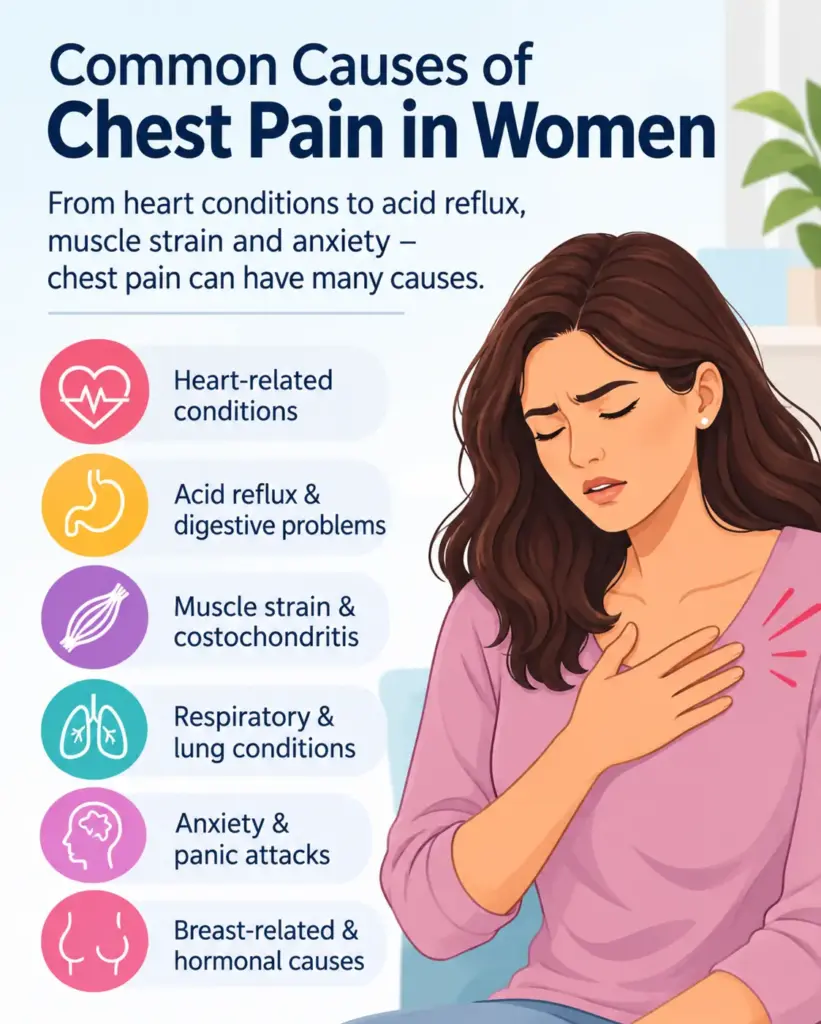
1. Heart-Related Causes
Heart-related chest pain must always be considered, particularly when symptoms are new, unexplained, or associated with other warning signs.
Coronary artery disease and angina:
Coronary artery disease is the result of the narrowing of the arteries that supply blood to the heart. When there is insufficient blood flow to the heart muscle, one may experience angina – pain characterized by the sensation of pressure, squeezing, or heaviness in the chest. This may occur during physical or emotional exertion, but also when a person is at rest.
Heart attack:
A heart attack happens when blood flow to some part of the heart muscle becomes blocked or significantly restricted. The symptoms may involve chest pressure or discomfort, pain that radiates to the arm, back, or jaw, difficulty breathing, nausea, cold sweat, and dizziness.
Other cardiac conditions:
Conditions such as pericarditis or inflammation of the outer layer of the heart, as well as other heart problems, may also cause chest pain. Pericarditis usually causes sharp chest pain that intensifies upon inhaling deeply or lying down.
2. Acid Reflux and Digestive Problems
Gastroesophageal Reflux Disease (GERD) is yet another potential cause of chest pain. This happens due to the backflow of the contents of the stomach into the esophagus and gives rise to a feeling of burning behind the breastbone.
Pain can increase following meals, when bending, or when lying down. Other conditions that can lead to similar pain include indigestion, bloating, and esophageal spasms.
But one should not necessarily associate chest pain with acidity, particularly if it occurs suddenly and if it is accompanied by breathlessness, sweating, or dizziness. Sometimes heart problems can mimic indigestion.
3. Muscle Strain and Costochondritis
A muscle strain occurs as a result of lifting too much weight, vigorous exercises, continuous coughing, and abnormal movements. The pain becomes worse during any activity involving the upper body, lifting arms, or touching the painful area.
Costochondritis is a condition where there is inflammation of the cartilage joining the rib and breastbone. Tenderness does not necessarily indicate that the pain is due to musculoskeletal problems since it can also be related to the heart.
4. Respiratory and Lung-Related Conditions
There exist some respiratory problems that result in chest pain, especially during deep breathing and coughing. Some of them include pneumonia, pleurisy (which refers to inflammation of the tissue around the lungs), and pulmonary embolism (blood clots within the lungs).
Pulmonary embolism is an emergency situation which could lead to death if not treated immediately. Its symptoms may include sudden breathing difficulties, chest pain that gets worse with breathing, fast heartbeat, blood in coughed-up mucus, and fainting.
5. Anxiety and Panic Attacks
A person suffering from panic attacks and anxiety disorders experiences chest tightness, rapid heartbeat, sweating, dizziness, shivering, and breathlessness. Such feelings may be very scary and similar to those related to heart disease.
Chest pain due to stress is a real bodily condition. Nevertheless, one should remember not to conclude that chest pain results from an anxiety disorder before ruling out other possible causes that might be very dangerous.
6. Breast-Related and Hormonal Causes
Breast tenderness or pain may sometimes be perceived as chest discomfort. Hormonal changes associated with the menstrual cycle, pregnancy, and menopause can contribute to breast sensitivity. Breast pain may affect one or both breasts and can sometimes extend towards the armpit.
Breast pain is not usually a sign of breast cancer on its own. Nevertheless, a new breast lump, nipple changes, skin dimpling, redness, or persistent localised pain warrants medical evaluation. Chest pain that feels deeper than breast tenderness should not automatically be attributed to hormonal changes.
How Heart Attack Symptoms May Differ in Women
One important consideration when understanding the common causes of chest pain in women is that a heart attack does not always present with sudden, crushing chest pain.
Women can experience the same symptoms commonly recognised in men, including chest pressure or discomfort. They may also experience accompanying symptoms such as:
- Unusual tiredness or sudden weakness.
- Shortness of breath, with or without chest pain.
- Nausea, vomiting, or indigestion-like discomfort.
- Pain in the back, shoulders, neck, jaw, or one or both arms.
- Cold sweating, dizziness, or light-headedness.
Women could also have symptoms similar to those exhibited by men and could include chest discomfort or pain as well as any of the following symptoms: These symptoms could be gradual or intermittent. It is therefore not correct for women to conclude that they are not likely to suffer from a heart attack due to their absence of typical symptoms. The AHA and ACC advise that it is vital to consider cardiac causes whenever women exhibit chest pain.
When Should Women Seek Urgent Medical Attention?
Seek emergency medical help immediately if chest pain is sudden, severe, persistent, or accompanied by any of the following:
- Pressure, squeezing, or tightness in the chest.
- Pain spreading to the arms, back, neck, jaw, or upper abdomen.
- Shortness of breath, cold sweating, nausea, or faintness.
- Sudden chest pain with difficulty breathing or coughing up blood.
- Sudden, severe chest or upper-back pain, especially with fainting or marked weakness.
Don’t wait till the symptoms become severe, nor try to find out the cause by yourself. In India, dial 112 for help or contact your local emergency service. Do not drive yourself to the hospital in case you suspect a heart or breathing emergency.
For women without emergency symptoms, regular preventive screening can also help provide a broader view of overall health and cardiovascular risk. NURA’s full body health checkup in Calicut combines Ai-assisted imaging, laboratory assessments and doctor consultation to screen multiple aspects of health, including cardiovascular, respiratory and metabolic health. NURA also offers preventive health screening at centres in Chennai, Bengaluru, Gurugram, Mumbai and Hyderabad, making comprehensive screening accessible across multiple locations.
When Is a Medical Evaluation Necessary?
Medical evaluation is indicated for chest pain which occurs repeatedly, is chronic, occurs while performing physical activities or does not have any cause. Medical evaluation is particularly crucial in women who have certain risk factors like high blood pressure, diabetes, high cholesterol levels, smoking habits, obesity, or early history of heart disease in their families.
The healthcare provider could evaluate the symptoms, medical background and cardiovascular risk factors in these women and suggest investigation methods like electrocardiogram (ECG), blood test or other imaging when necessary. Investigations depend on the symptoms. Even if previous episodes were attributed to acidity, anxiety, or muscle strain, a change in the pattern or severity of pain deserves attention.
Conclusion
The common causes of chest pain in women range from digestive and musculoskeletal problems to serious cardiac and respiratory conditions. While not every episode indicates a medical emergency, chest pain should never be dismissed based on age, gender, or assumptions about its cause.
Recognising warning signs, seeking timely medical assessment, and understanding that heart attack symptoms can vary may help women receive appropriate care when it matters most. When chest pain is sudden or accompanied by concerning symptoms, seeking emergency help promptly is the safest course of action.
Medical disclaimer: This article is for general educational purposes only and is not a substitute for professional medical advice, diagnosis, or treatment.
About the Author

Dr. Bilal Thangal
Dr. Bilal Thangal is the Clinical Lead at NURA, an AI-powered preventive health screening centre. With extensive experience as an ICU physician, he brings a strong background in acute and critical care medicine.At NURA, he oversees clinical operations, physician training, and service development. His interests include preventive healthcare, clinical innovation, and integrating technology into everyday medical practice.