Most people think of heart failure as something sudden. A dramatic event that lands you in a hospital bed overnight. In reality, congestive heart failure (CHF) rarely works that way. It builds up slowly, often over years, and the early signs are easy to brush off as tiredness, age, or just a bad week at work. By the time symptoms become impossible to ignore, the heart has usually been struggling for a while.
That’s what makes this condition tricky. It isn’t really about a single dramatic moment. It’s about a heart that is gradually losing its ability to pump blood the way it should. Recognising symptoms and addressing underlying risk factors early can support timely medical evaluation and appropriate care.
What Exactly Is Congestive Heart Failure?
CHF happens when the heart muscle can’t pump blood efficiently enough to meet the body’s needs. This doesn’t mean the heart has stopped. It means it’s working under strain and blood starts to back up in places it shouldn’t. Fluid collects in the lungs, the legs, the abdomen, and other tissues, which is where the “congestive” part of the name comes from.
Heart failure can develop as a result of conditions that affect the heart over time, including high blood pressure, coronary artery disease, diabetes, heart valve disease, or a previous heart attack. These conditions can weaken or stiffen the heart muscle and affect its ability to pump or fill properly.
Four Stages of Congestive Heart Failure
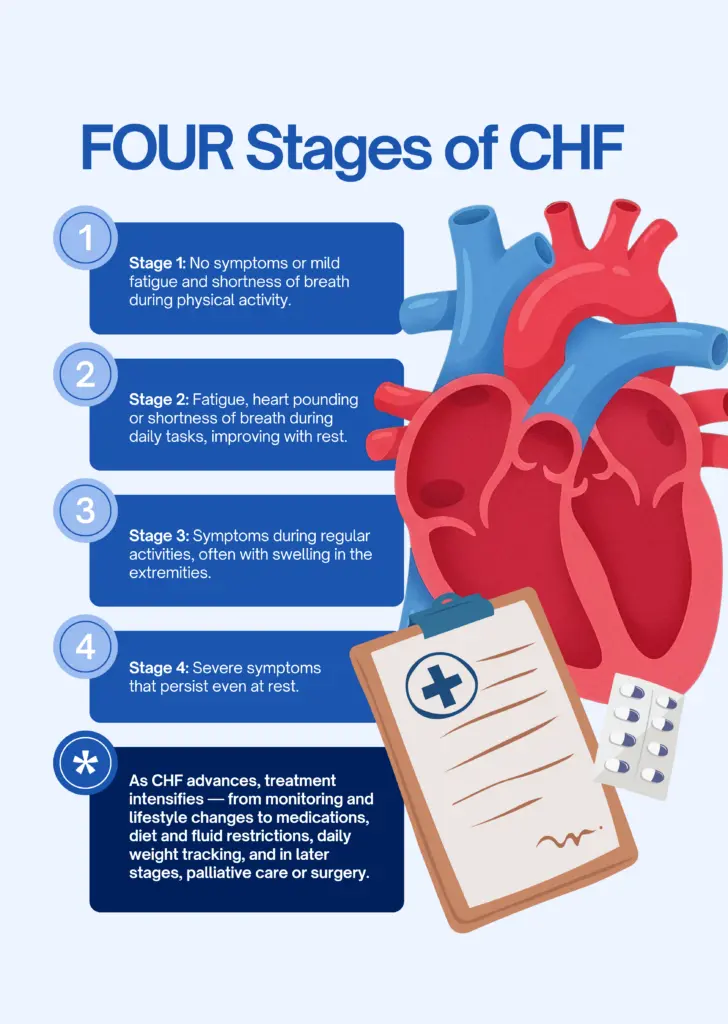
Healthcare professionals may describe heart failure using four stages, from Stage A to Stage D, based on a person’s risk factors, structural heart disease, symptoms, and severity. Stage A refers to people who are at risk of developing heart failure but do not have symptoms or structural heart disease. Stage B describes people who have evidence of structural heart disease or other findings associated with heart failure but have not developed symptoms. Stages C and D involve symptomatic heart failure, with Stage D representing advanced disease.
Understanding these stages highlights why managing cardiovascular risk factors and seeking medical evaluation when symptoms appear can be important.
Early Symptoms People Tend to Miss
Heart failure symptoms don’t usually arrive all at once. They creep in gradually, and because they overlap with everyday tiredness or ageing, people put off seeing a doctor. Some of the earliest signs include:
- Breathlessness during activities that used to feel easy — climbing a flight of stairs, walking briskly, or even lying flat in bed
- Unusual fatigue, where routine tasks leave you far more exhausted than they should
- Swelling in the feet, ankles or legs, especially noticeable by evening
- Waking up at night to urinate more often than usual
- A persistent cough or wheezing, sometimes accompanied by white or pink, blood-tinged mucus
- Rapid weight gain over a few days, caused by fluid buildup rather than diet
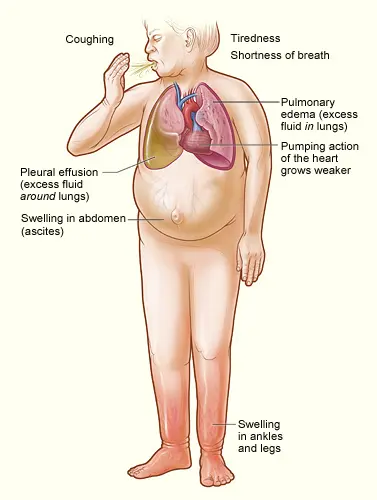
Individually, none of these feels alarming. Together, especially if they persist or worsen, they’re worth paying attention to. As the condition advances, symptoms tend to get harder to ignore. Chest discomfort, fainting spells, a racing or irregular heartbeat, and breathlessness that shows up even while resting. At that stage, treatment options narrow and the focus shifts from prevention to management.
Why So Many Cases Go Unnoticed Until It’s Late
Part of the problem is that CHF doesn’t have one obvious warning sign the way a heart attack does. It’s a slow decline, and the body compensates for a surprisingly long time before symptoms become obvious. Someone in their 40s or 50s with untreated high blood pressure or unmanaged diabetes may already be in Stage A or B without knowing it, simply because there’s nothing yet to feel.
This is very similar to what we’ve written about with coronary artery disease. Plaque builds up silently for years, and the first sign is often a major event rather than a warning. Heart failure can also develop gradually, particularly when underlying conditions such as hypertension, coronary artery disease, diabetes, or previous heart damage remain poorly controlled. The risk factors are known well in advance; the symptoms just take time to show up.
Who Should Consider Getting Screened
You don’t necessarily need to have symptoms to discuss your cardiovascular risk with a healthcare professional. Preventive health assessments can help identify risk factors before they contribute to more serious heart problems. In fact, that’s the whole point of screening: catching risk before it turns into disease. You may want to prioritise a screening if you:
- Have high blood pressure, diabetes or high cholesterol
- Have a family history of heart disease or heart failure
- Have had a previous heart attack or diagnosed coronary artery disease
- Smoke, or have a long smoking history
- Are overweight or lead a largely sedentary lifestyle
- Are over 40, even without any noticeable symptoms
- Have noticed mild breathlessness, fatigue or swelling that you’ve been putting off checking
If any of this sounds familiar, it doesn’t mean you have heart failure. It means your heart could benefit from a closer look before anything develops further.
What a Heart Health Screening Actually Looks For
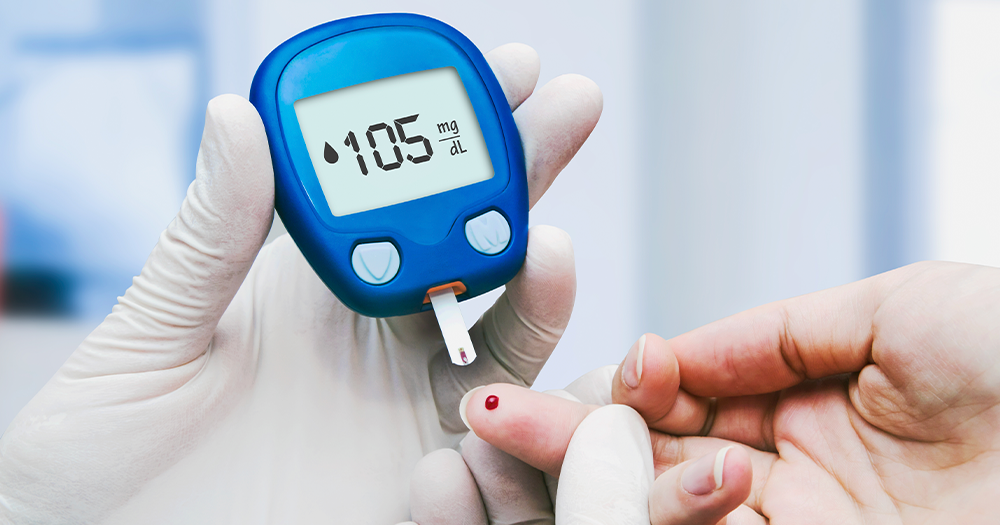
A good heart health screening doesn’t just check whether your heart “feels fine.” It looks at the underlying structure, function, and risk factors that may not produce noticeable symptoms in the early stages. Depending on an individual’s health profile, a cardiovascular assessment may include blood pressure measurements, cholesterol and blood sugar tests, imaging, and other cardiac investigations.
One important test used to assess the heart’s structure and function is echocardiography (Echo). An echocardiogram uses ultrasound waves to create images of the heart, allowing healthcare professionals to evaluate how the heart chambers, valves, and heart muscle are functioning. It can provide information about the heart’s pumping ability and help identify certain structural or functional abnormalities.
Echo can be particularly useful when symptoms such as breathlessness, fatigue, swelling, or an irregular heartbeat need further evaluation. It may also be recommended based on an individual’s medical history, risk factors, or findings from other assessments. However, no single test provides a complete picture of cardiovascular health, which is why different investigations may be used together depending on the individual’s clinical needs.
For a broader look at the different markers doctors track, our post on 7 indicators that tell you everything about your heart health explains what different cardiovascular measurements can reveal and why they matter.
How NURA Can Support Preventive Heart Health Assessment
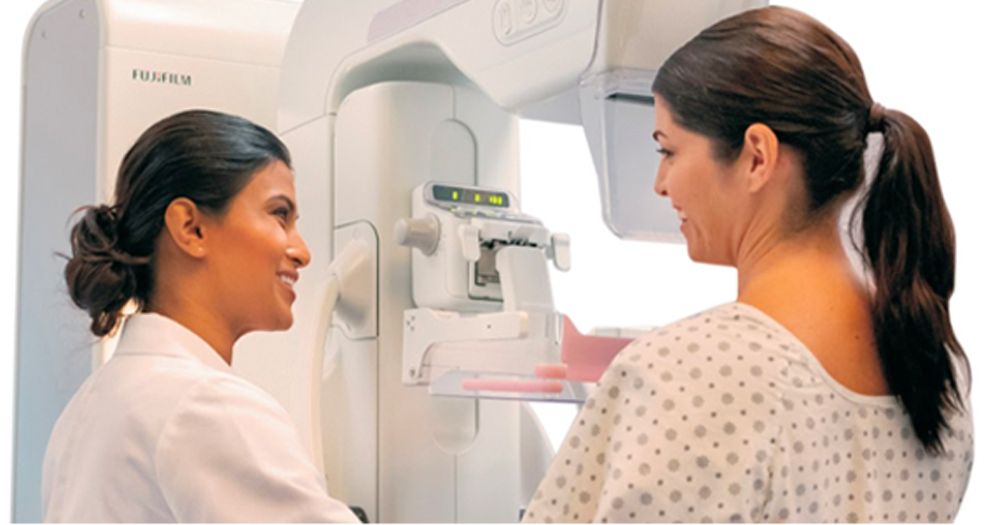
At NURA, the comprehensive screening covers the early detection of common cancers and lifestyle diseases including heart attack, stroke, diabetes and assessing metabolic health. Healthy Heart screening combines cardiovascular risk assessment which includes analysis of calcium scoring and epicardial adipose tissue (EAT). These findings can be considered alongside blood pressure, cholesterol, blood sugar, medical history, and other relevant health indicators.
The objective of this comprehensive approach is to help identify potential cardiovascular risks and provide meaningful information that can support appropriate follow-up, lifestyle changes, risk-factor management, or further medical evaluation when necessary. NURA offers comprehensive heart health checkups in Bangalore, Gurugram, Mumbai, Hyderabad, Calicut, and Chennai, providing advanced preventive health screening and AI-powered health assessments.
Small Steps That Support a Healthier Heart
Screening tells you where you stand, but daily habits are what keep that picture from getting worse. A few things worth building into your routine:
- Keep blood pressure and blood sugar under control if you’re already managing either condition
- Cut back on salt, especially if you tend to eat out often
- Stay physically active, even if it’s just regular walking
- Avoid smoking and limit alcohol
- Don’t ignore breathlessness or swelling that lingers for more than a few days, check with a doctor instead of waiting it out
These measures cannot completely eliminate the risk of heart failure, but they can support cardiovascular health and help manage several important risk factors when incorporated into a healthy lifestyle.
The Earlier You Know, the More Options You Have
Congestive heart failure can develop gradually, often in association with underlying conditions that affect the heart over time. Some symptoms can be easy to dismiss, which is why persistent or worsening breathlessness, fatigue, swelling, or other concerning symptoms should not be ignored.
A comprehensive heart health assessment can help evaluate relevant cardiovascular risk factors and, when clinically appropriate, assess the structure and function of the heart. Understanding these findings can help individuals and their healthcare providers make informed decisions about prevention, monitoring, further evaluation, and treatment when necessary.